
For Tampa Bay product brands launching a new store, replacing a restrictive theme, improving conversion, or preparing a storefront for a larger catalog and more demanding merchandising calendar.
A better Shopify store serves customers and the team operating it.
Many Shopify sites look impressive in a design file and become frustrating the moment a merchant needs to launch a collection, change campaign content, explain product details, or handle an unavailable variant. We design storefront systems around both sides of that experience.
Our Shopify work includes discovery, information architecture, custom theme development, reusable Online Store 2.0 sections, product and collection templates, navigation, search and filtering states, cart behavior, editorial merchandising, and responsive quality assurance.
The goal is not to install as many apps as possible. It is to create a focused storefront where the brand is clear, the buying path is trustworthy, and the backend remains practical for the people responsible for revenue.
A Tampa Shopify system should support campaign speed without theme drift
A growing Tampa brand may be coordinating product launches, paid media, creator content, pop-ups, wholesale conversations, and seasonal promotions at the same time. The storefront needs reusable campaign landing patterns, dependable product data, predictable collection logic, and scheduled content controls so the commercial team can move quickly without creating a new layout for every initiative.
We identify which changes happen daily, which happen by campaign, and which should remain developer-controlled. That distinction informs section limits, metafields, templates, navigation, media ratios, app responsibilities, and documentation. The outcome is a storefront that can absorb faster marketing activity while preserving performance, accessibility, analytics, and a coherent customer journey.
Shopify services for launch, redesign, and growth
Custom Shopify theme development
Purpose-built Liquid, sections, templates, and theme settings aligned to the brand and catalog.
Storefront UX and conversion design
Improve navigation, product discovery, product pages, cart flow, mobile behavior, and confidence signals.
Online Store 2.0 architecture
Give merchants flexible content controls without turning every page into an inconsistent page-builder experiment.
Product and collection merchandising
Design reusable editorial patterns that help customers understand products and help teams run campaigns.
Theme performance and accessibility
Reduce unnecessary scripts, stabilize layouts, optimize media, and test keyboard and mobile experiences.
Theme documentation and launch support
Deliver setup guidance, quality assurance, redirects, analytics checks, and support for the first release.
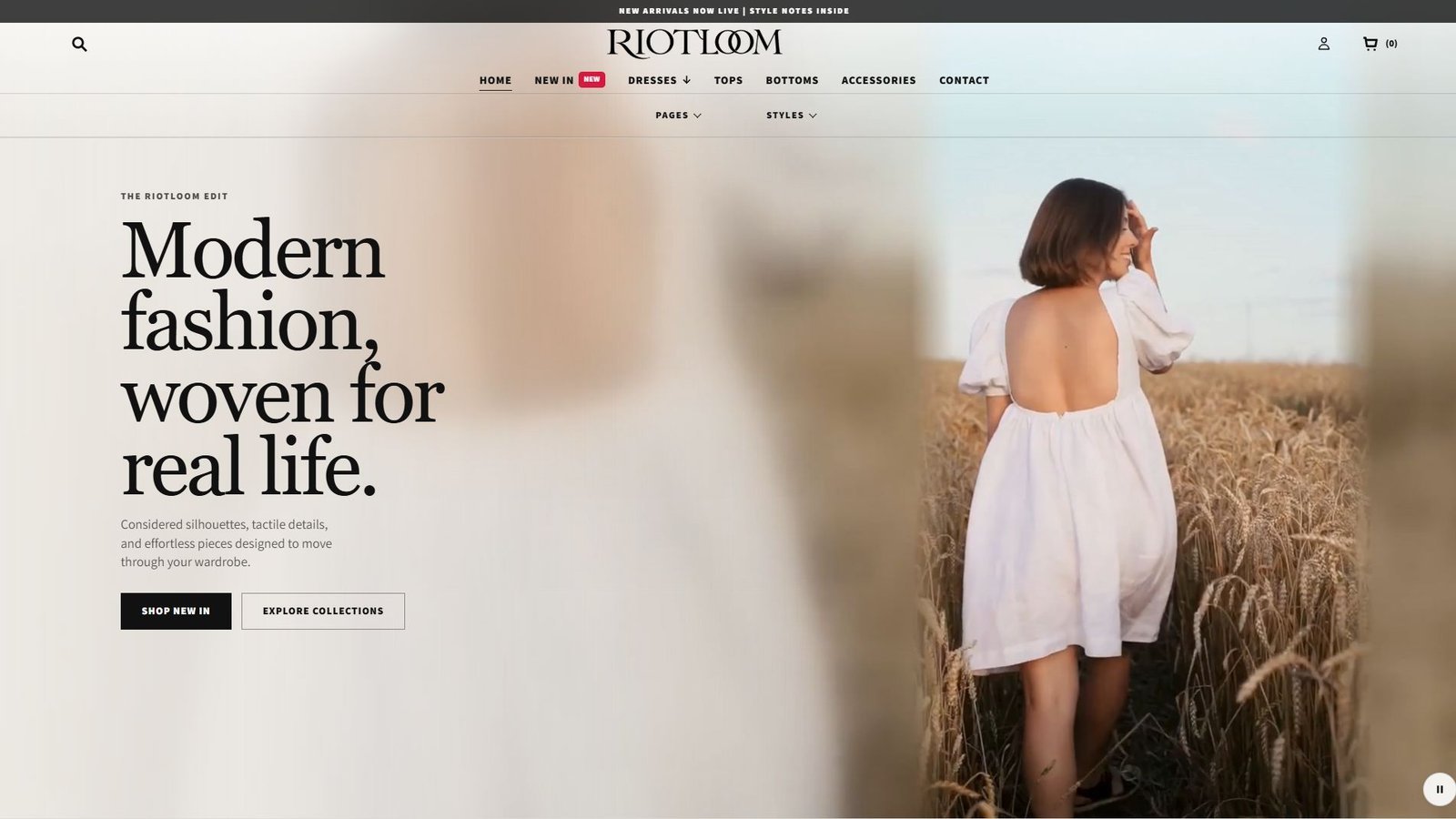
RiotLoom shows the depth of the Shopify work.
RiotLoom is a fashion-first Shopify OS 2.0 theme designed and engineered as a complete storefront system rather than a single homepage. It includes editorial merchandising, flexible merchant controls, product and collection templates, navigation, search, cart, customer, and empty states.
The project demonstrates how brand expression and operational resilience can coexist. High-impact typography and imagery create the visual identity, while repeatable sections and clear settings keep the store manageable after handoff.
That same approach applies to Tampa retailers: understand the catalog, buying questions, merchandising rhythm, internal team, and growth constraints before deciding what the theme should do.
RiotLoom
Designed and engineered a fashion-first Shopify theme with editorial merchandising, resilient merchant controls, and complete storefront states.
A Shopify process grounded in the catalog
- 01 — Store auditReview analytics, theme code, catalog structure, apps, merchandising, search, mobile experience, and conversion friction.
- 02 — Commerce strategyMap customer questions, product discovery, templates, content ownership, and the highest-value improvements.
- 03 — Theme systemDesign reusable sections and core storefront states around realistic products and content.
- 04 — Development and migrationBuild the theme, configure controls, migrate approved content, and minimize unnecessary dependencies.
- 05 — Ecommerce QATest products, variants, collections, search, cart, accounts, responsive states, analytics, and launch redirects.
What businesses ask before starting
What should a Tampa Bay Shopify build include beyond the homepage?
Compare storefront states, merchant controls, integrations, migration, performance, and release QA.
Need a site that looks premium and behaves like it was engineered on purpose?
If the current experience feels generic, slow, or unfinished, we can tighten the positioning and ship something that actually earns attention.