For Clearwater and Pinellas County founders, growing businesses, service operators, and product teams building customer portals, directories, dashboards, MVPs, integrations, or a more capable marketing platform.
The right web developer solves the operating problem behind the screen.
Custom web development becomes valuable when a business has a workflow, dataset, customer journey, or product idea that an off-the-shelf template cannot represent well. We begin with the people, decisions, data, edge cases, and commercial outcome—not a preferred framework.
ProWebDevSolutions keeps product strategy, UX, and frontend engineering in the same loop. That reduces the handoff gaps that create attractive mockups with missing states, brittle components, unclear ownership, or a launch that still needs months of rescue work.
The result is a maintainable system: clear architecture, reusable interfaces, fast delivery, direct-route reliability, and enough operational thought to keep the product useful after its first release.
A lean Clearwater product should stay useful after handoff
A Clearwater operator may need a customer directory, estimator, portal, intake flow, scheduling interface, data browser, or focused MVP without hiring a large permanent product team. We separate the revenue-critical workflow from convenient extras, identify the person responsible for each operational task, and design an initial release that can be measured before complexity expands.
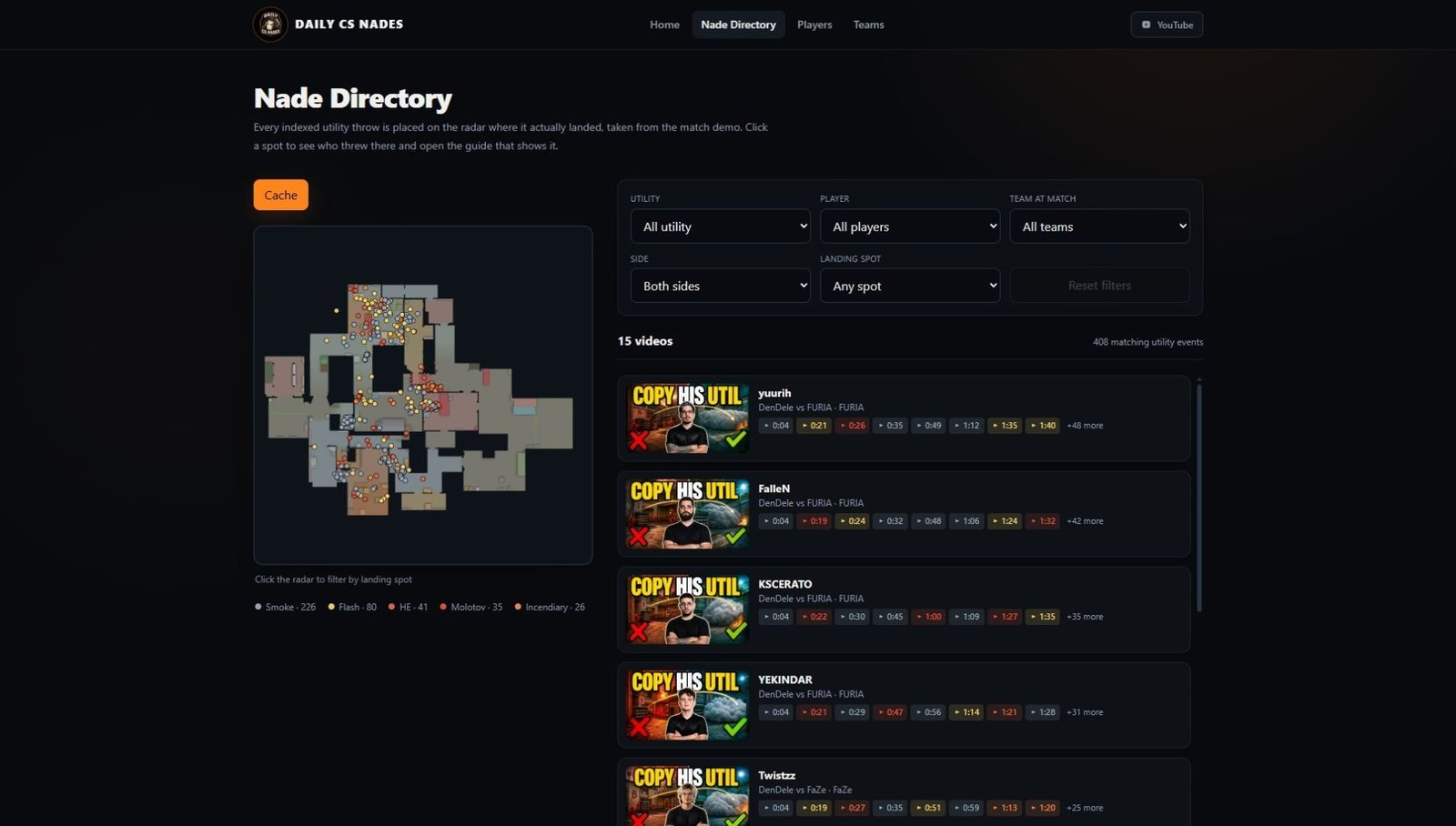
Where the product allows it, static delivery and managed services can reduce hosting overhead and failure surface. Clear content controls, documented data imports, observable form or event flows, graceful error states, and repeatable deployment checks help a small team keep the system dependable. Daily CS Nades demonstrates this approach through a fast static interface over a substantial indexed dataset.
Custom web development capabilities for Clearwater teams
Workflow and MVP definition
Turn the operator's daily problem into a bounded first release with explicit ownership and evidence targets.
Structured directories and finders
Model searchable records, map or radar views, filters, comparison paths, media links, and trustworthy no-result states.
Lean React and Next.js interfaces
Use TypeScript, reusable components, and static or server rendering without burdening a small team with unnecessary infrastructure.
Data import and integration design
Document how source data enters the product, how failures surface, and how an operator can verify the latest successful update.
Release recovery and stabilization
Identify the narrowest path from unfinished code to a dependable customer workflow before discussing a replacement architecture.
Low-overhead deployment and handoff
Automate repeatable releases, capture essential analytics, and leave clear operating notes for the people maintaining the product.
Complex products, shipped as understandable customer experiences.
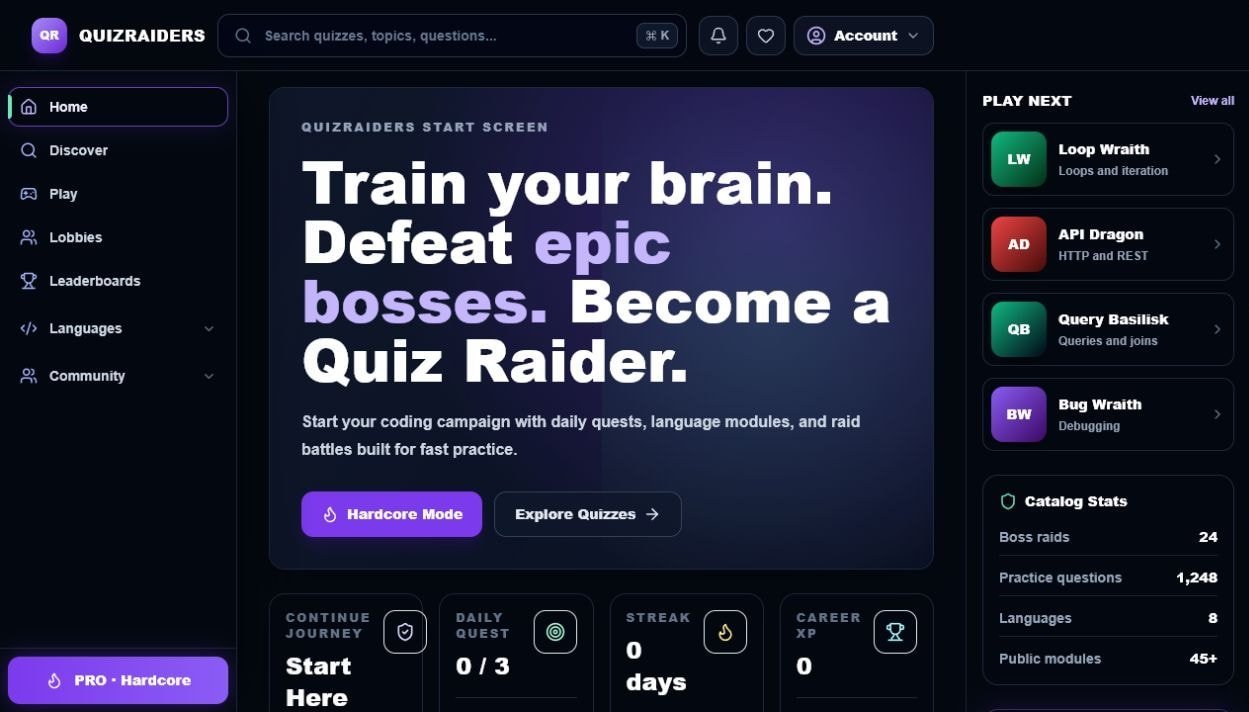
Daily CS Nades turns thousands of professional CS2 utility events into a radar-driven directory with player, team, side, map, utility, and timestamp filters. QuizRaiders organizes practice content into quests, progression, competitive loops, and a substantial application interface.
RiotLoom adds production commerce depth: merchant-managed sections, product and collection templates, navigation, search, cart, customer, and empty states. Nutri-Vend, Cobblehaus, and KiOhana demonstrate the same discipline across service, hospitality, and care experiences.
These are working systems built around real operations—not generic developer demos. That breadth is what lets us translate an unfamiliar Clearwater business problem into a focused interface and a dependable release plan.
Daily CS Nades
An interactive CS2 utility directory that indexes professional grenade throws by landing position, player, team, side, utility type, and map.
QuizRaiders
An in-progress coding practice platform that turns real programming questions into boss raids, daily quests, language tracks, and competitive learning loops.
A development process that exposes risk early
- 01 — Observe the operationWalk through the current manual process, source information, customer questions, exceptions, and the person accountable for the outcome.
- 02 — Bound the useful releaseChoose one complete customer or operator journey, define acceptance evidence, and defer features that do not strengthen it.
- 03 — Prove the data pathValidate records, imports, permissions, integrations, and failure handling before visual polish hides structural risk.
- 04 — Build the usable loopImplement responsive interaction, operator controls, analytics, and documentation together in reviewable slices.
- 05 — Hand off an observable systemExercise direct links, mobile states, accessibility, errors, deployment, and recovery, then document how to confirm the system is healthy.
What businesses ask before starting
How does a startup move from an idea to a credible web product?
Define the smallest useful release, architecture, evidence, launch gates, and post-launch learning loop.
Need a site that looks premium and behaves like it was engineered on purpose?
If the current experience feels generic, slow, or unfinished, we can tighten the positioning and ship something that actually earns attention.