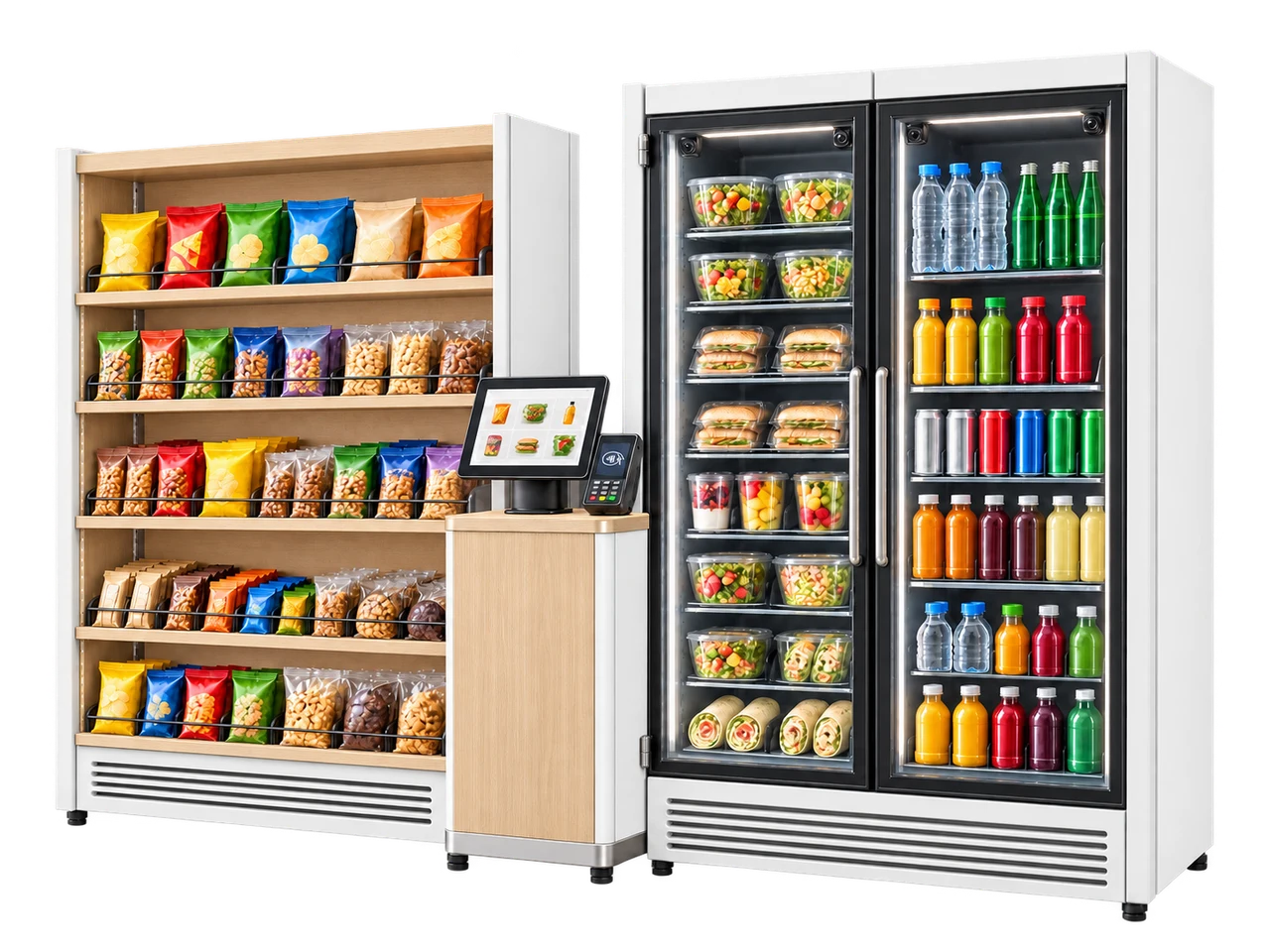
A self-checkout break space should make the next step easy to understand. Customers need to find products, see prices, complete the purchase, and know where to ask for help. A considered layout brings those moments together while leaving room for the rest of the break area to work.
Begin with the customer’s route
Picture someone entering the room for the first time. Can they tell what is available and where to pay? Look at sightlines, product grouping, checkout position, and the route back to seating or work. Avoid placing a queue across a doorway, a main circulation path, or another shared facility.
Keep prices close to the choice
Customers should be able to understand a price before reaching checkout. Agree how labels are displayed, updated, and checked when products change. The actual checkout system and product information should match. A tidy shelf is useful only when the purchasing information is clear as well.
Make payment guidance brief and useful
Explain the steps customers need to complete on the actual system. Confirm supported payment methods, receipts, and what to do if a transaction does not finish as expected. Guidance should focus on the customer’s task rather than the technology behind the terminal.
Review access to the whole interaction
Consider approaching the shelves and cooler, reading product information, choosing an item, using checkout controls, and moving away from the payment point. Discuss the needs of the building’s users and applicable accessibility requirements with the responsible site team. The checkout position is one part of the experience.
Leave a route for the service team
A market will need restocking, checks, cleaning, and occasional maintenance. Identify how deliveries reach the area and where supplies can be handled without blocking customers. Agree when the work will happen and who provides site access. Chilled displays add equipment and food-handling requirements that must be confirmed.
Make help visible
A customer should not have to guess whether to ask reception, the site contact, or the provider when there is a problem. Agree the route and display the relevant details clearly. Review how payment questions, product concerns, and equipment faults are handled.
A sample market image can suggest the style of a space, but the actual layout needs a measured plan and verified component requirements. Our micro-market guide covers the broader placement conversation.